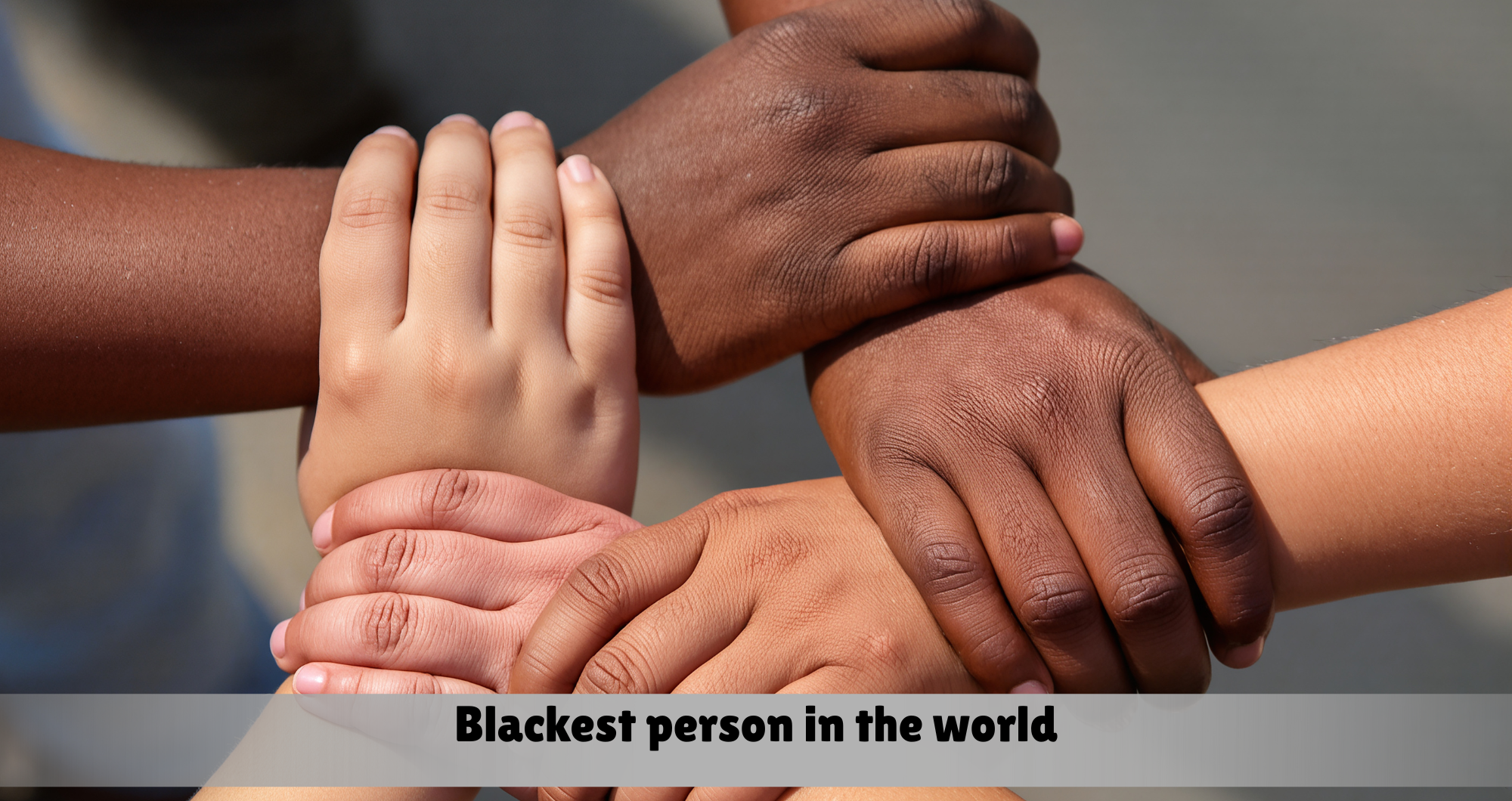
The concept of the “blackest person in the world” intrigues many and raises questions about identity, race, and representation.
For some, it’s a title that sparks curiosity. For others, it evokes deeper conversations about beauty standards and cultural narratives. The fascination with dark skin transcends mere pigmentation; it delves into social dynamics and historical contexts.
As we explore this topic, we’ll navigate through myths versus facts surrounding the blackest person in the world. We’ll also highlight notable individuals recognized for their strikingly deep melanin tones.
Furthermore, we’ll discuss why there isn’t an official Guinness record for such distinctions while exploring how media portrayals shape public perception.
Join us on this journey as we unpack these layers of meaning behind one intriguing question: who truly holds the title of being the blackest person in the world?
Who is Considered the Blackest Person in the World?
The title of the “blackest person in the world” has often been attributed to individuals who possess exceptionally deep skin tones. One name that frequently comes up is that of an African man named Ngubane, known for his strikingly dark complexion.
Texture and hue play a significant role in how we perceive skin color. Ngubane’s melanin-rich skin has drawn attention worldwide, leading many to discuss what it means to hold such a title. However, it’s essential to recognize that determining the “blackest” individual can be subjective.
Some argue that this label lacks scientific backing and focuses too heavily on visual perception rather than cultural significance or identity.
Others feel such distinctions are unnecessary and serve only as curiosity fodder without contributing meaningfully to discussions about race.
In addition to Ngubane, another notable figure is Alek Wek, a South Sudanese model with deeply pigmented skin who has made waves in fashion. Her presence challenges conventional beauty standards while representing black women positively across various platforms.
It’s not just about being recognized for having darker skin; it’s also about how society responds to those representations. The fascination with very dark complexions reflects broader issues related to acceptance and beauty norms within different cultures.
Social media plays a pivotal role in amplifying these conversations, creating spaces where individuals celebrate their heritage and embrace their unique features unapologetically.
While no official record exists naming one definitive “blackest person,” the dialogue continues around melanin diversity, encouraging people everywhere to appreciate all shades of blackness.
Myths vs Facts About the Blackest Person in the World
The concept of the “blackest person in the world” often generates intrigue and controversy. Many myths surround this idea, leading to misconceptions about race and skin color.
One common myth is that there exists a definitive record for the blackest person in the world. While some individuals are celebrated for their deep melanin levels, no official title or measurement exists to validate this claim. Skin tone can vary greatly among individuals within communities.
Another misconception suggests that darker skin equates to better health or strength. While increased melanin may offer protection against UV radiation, it does not inherently signify superior physical attributes or capabilities. Health varies across all skin tones due to numerous genetic factors unrelated to color alone.
People sometimes assume that being extremely dark-skinned isolates someone from societal norms or beauty standards.
This belief overlooks cultural diversity and individual experiences within different societies where dark skin is embraced as beautiful and powerful.
Some believe that those with darker complexions face more discrimination than lighter-skinned individuals, perpetuating a harmful narrative about intra-racial biases.
However, experiences differ widely based on geography, culture, and personal circumstances—making it impossible to generalize such assumptions universally.
Additionally, many think that extreme pigmentation is rare; however, various ethnic groups globally showcase rich shades of brown and black skin tones as part of their heritage. Nature’s palette has created an extensive variety of hues over centuries.
There’s a notion that people with very dark skin cannot be successful or accepted in mainstream society—a damaging stereotype fueled by media portrayals rather than reality. Individuals defy these narratives every day through achievements across numerous fields.
Notable Individuals Known for Extremely Dark Skin
There are several notable individuals recognized for their remarkably dark skin. These figures reflect the diversity within the African diaspora and challenge conventional beauty standards.
One of the most renowned is Omo “Bunny” Naija, a Nigerian model celebrated for her striking deep complexion. She has garnered attention in fashion circles and social media, redefining perceptions of beauty across different cultures.
Another prominent figure is Nyakim Gatwech, known as the “Queen of Dark.” The South Sudanese model uses her platform to advocate for embracing one’s natural skin tone. Her journey from refugee to successful model serves as an inspiration to many.
In entertainment, there’s actress Lupita Nyong’o. While not typically labeled as the “blackest person in the world,” she embraces her rich melanin with pride. Through her roles and public appearances, she emphasizes self-acceptance and cultural representation.
British artist Misan Harriman also stands out due to his deep complexion and impactful work in photography and activism.
He uses his art to challenge stereotypes about race while uplifting voices often marginalized in mainstream media.
The late musician Prince was another iconic figure with extremely dark skin known for pushing boundaries through his music and style. His influence transcended racial lines while celebrating individuality and authenticity.
We cannot forget about supermodel Alek Wek. Hailing from South Sudan, she broke barriers by becoming one of the first black models on major runways during the 90s era when diversity was limited in fashion shows worldwide. Her presence continues to inspire future generations seeking representation on global stages.
Why There is No Official Guinness Record for the Blackest Person in the World
The idea of determining the blackest person in the world might seem compelling, but it raises complex issues. The lack of an official Guinness World Record for this distinction stems from various factors.
Skin color is a spectrum rather than a definitive category. It’s challenging to measure and compare shades across different individuals.
What may appear as the darkest hue to one person could vary drastically when viewed under different lighting conditions or contexts.
Additionally, defining “blackness” can be culturally nuanced. Various cultures interpret dark skin differently based on historical and social perspectives.
This diversity complicates any attempt at establishing a universal standard for measurement among individuals worldwide.
Moreover, Guinness World Records typically focuses on achievements that are quantifiable and verifiable.
Skin color does not fit neatly into these criteria due to its subjective nature. Without clear parameters for measuring darkness, maintaining consistency becomes nearly impossible.
Furthermore, focusing solely on who has the “darkest” skin can reinforce harmful stereotypes that associate beauty with lighter shades of skin while diminishing darker tones’ value and significance in society. This focus risks perpetuating divisive narratives rather than promoting unity through celebration of diversity.
Ethical considerations also play a role in why such records are avoided. Highlighting someone’s dark complexion without context could lead to exploitation or ridicule instead of respect and admiration for their heritage.
Many advocates believe that celebrating individual identities is far more meaningful than reducing people to mere physical attributes like skin tone alone. Emphasizing personal stories over superficial comparisons fosters greater understanding and appreciation across cultures.
Cultural and Social Perspectives on Dark Skin
Cultural and social perspectives on dark skin vary significantly across different societies. In some cultures, deep melanin is celebrated as a symbol of beauty and strength.
Traditional African aesthetics often embrace darker skin tones, associating them with cultural heritage and pride.
However, this appreciation isn’t universal. In various regions around the world, including parts of Asia and Europe, lighter skin has historically been favored.
This preference can be traced back to colonialism and class distinctions where pale skin was equated with wealth and privilege.
The media plays a pivotal role in shaping perceptions about dark skin. Unfortunately, underrepresentation or negative portrayals often perpetuate stereotypes that affect self-esteem among individuals with darker complexions.
Positive representation can counter these narratives by showcasing dark-skinned figures in empowering roles.
Social platforms have become avenues for change regarding discussions around colorism—the discrimination based on shade within the same racial group. Influencers advocate for embracing all shades through campaigns promoting inclusivity.
Users share stories celebrating their identities while challenging conventional beauty standards imposed by society.
In fashion and beauty industries, there is an increasing recognition of diversity in skin tones. Brands are beginning to expand their product ranges to cater to darker complexions more authentically than before—a shift toward acknowledging the richness of all shades.
Artistic expressions also reflect varied cultural attitudes towards dark skin; literature, music, cinema—many use their platforms to highlight experiences related to melanin-rich heritage proudly.
As conversations surrounding race continue evolving globally, so too do societal views on dark skin—highlighting both past struggles against prejudice and current movements pushing for greater acceptance.
How Media and Social Platforms Highlight the Blackest Person in the World
Media and social platforms have significantly influenced the conversation around who is considered the blackest person in the world.
These platforms serve as a stage for showcasing individuals with extremely dark skin tones, often elevating their narratives.
Social media allows users to share images and stories that celebrate diversity in skin color. Platforms like Instagram and TikTok are filled with content highlighting beauty, artistry, and culture surrounding darker complexions. This visibility helps challenge stereotypes associated with dark skin.
Influencers often embrace their unique features while encouraging others to do the same. They create communities where representation matters, fostering acceptance of all shades of blackness.
The viral nature of these posts can quickly bring attention to individuals who might otherwise go unnoticed.
Documentaries and online videos also play a crucial role in this discourse. They explore personal stories, experiences of discrimination, or celebration within different cultures that honor darker skin tones. Such narratives foster empathy and understanding among diverse audiences.
Moreover, hashtags related to dark skin awareness spark conversations globally. Movements advocating for self-love encourage followers to appreciate their natural beauty without conforming to societal standards.
However, not all representations are positive; sometimes they perpetuate harmful myths about those deemed “the blackest.” Misunderstandings persist despite efforts toward more authentic portrayals.
The media’s focus on extreme shades of melanin reflects broader cultural dynamics regarding race and identity.
As discussions continue online about what it means to be beautiful or accepted based on one’s complexion, it’s essential for creators and viewers alike to engage thoughtfully with these topics.
Conclusion: Understanding Skin Diversity and Representation
Understanding skin diversity and representation is crucial in our global society. The concept of the “blackest person in the world” often stirs debates rooted in cultural identity, beauty standards, and racial perceptions.
While there are individuals who may claim this title due to their exceptionally dark skin, it’s essential to recognize that such labels can oversimplify a rich tapestry of human experiences.
Dark skin has historically been marginalized in many societies. However, recent years have seen shifts toward embracing and celebrating all shades of blackness.
This change reflects broader social movements advocating for equity and representation across various platforms—media, fashion, art, and more.
The narratives around those deemed the “blackest” often highlight personal stories filled with resilience and strength. These tales remind us that behind every label lies a unique individual journey shaped by culture, heritage, and lived experiences.
Moreover, as discussions about race evolve globally, it becomes increasingly important to focus on understanding rather than categorizing people based solely on appearance.
Acknowledging diverse shades fosters inclusivity while challenging outdated stereotypes associated with darker skin tones.
Recognizing the value of each person’s story enriches our collective narrative about beauty—and humanity itself—while promoting a deeper appreciation for our shared existence amidst varying complexities of identity.
Embracing this diversity is not just beneficial; it’s necessary for creating an inclusive world where everyone feels represented regardless of their skin color or tone.
